


A neat post-op X-ray hides a brutal surgery.
Open reduction and internal fixation is one of the most common surgeries in fall, crash and workplace cases, and one of the most underestimated. The X-ray doesn’t show the clamps, the plate shaped to the bone or the screws drilled in one by one. We do.
Part 1 · The fracture
The break, built from the films
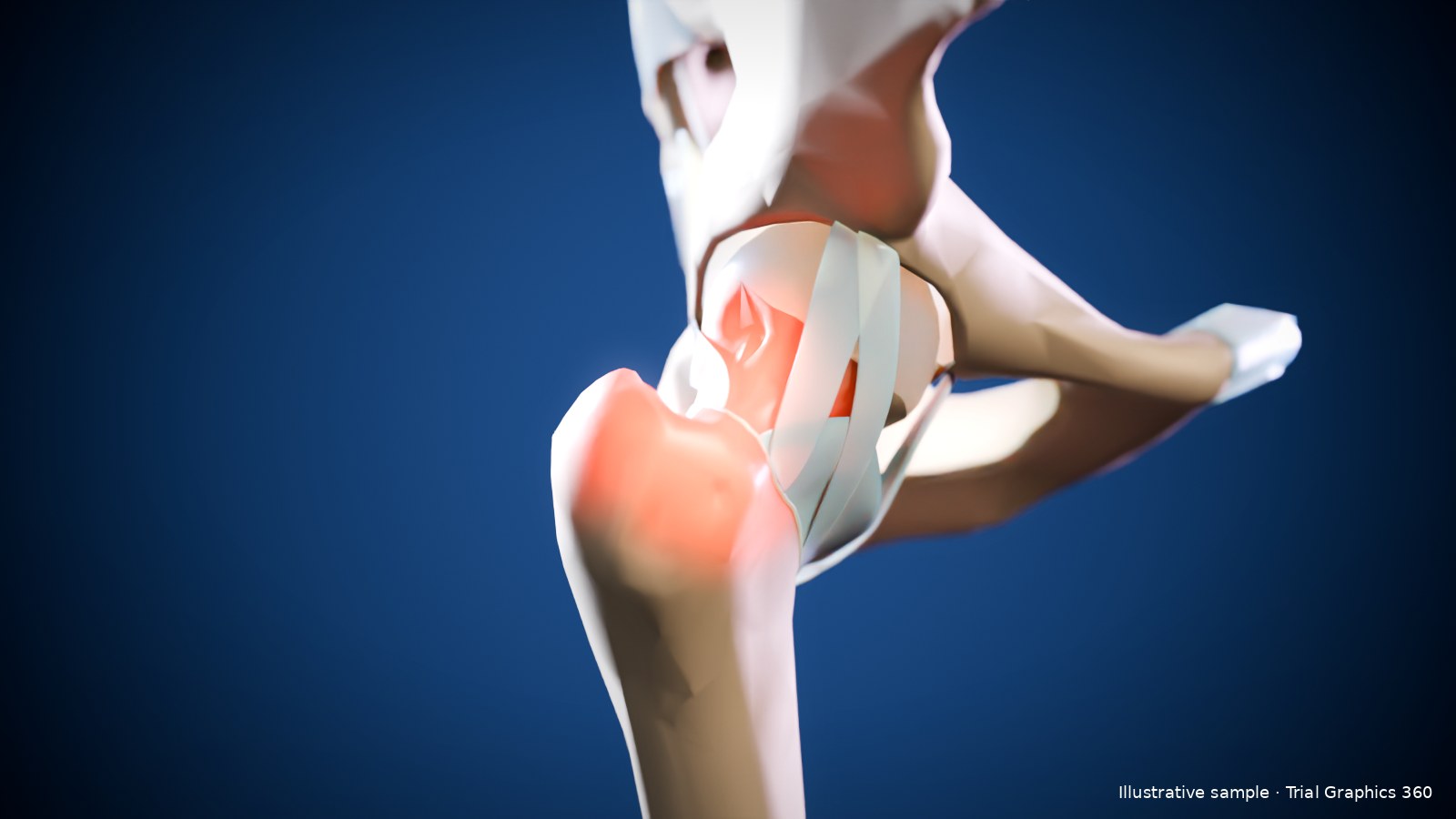
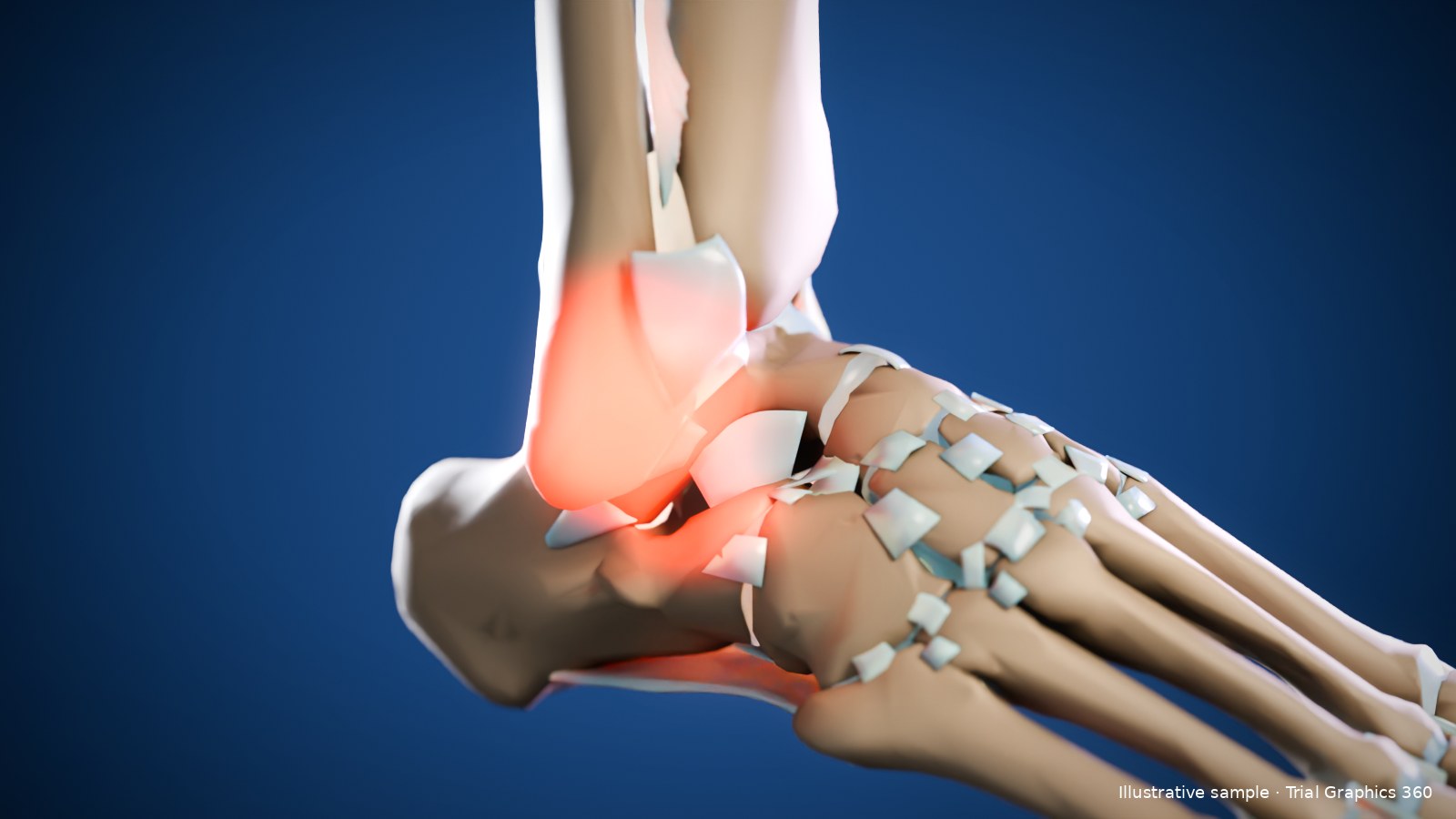
- 1Fracture pattern. Where the bone broke and which fragments moved, matched to the X-rays and CT.
- 2How it happened. For falls and crashes, the movement and forces that caused the break.
- 3Joint involvement. Which joint surfaces were damaged, and why that matters for the future.
- 4Where it applies. Ankle, wrist, hip, tibial plateau, shoulder, facial and orbital fractures.
Part 2 · The repair
Every plate and screw where the films put them
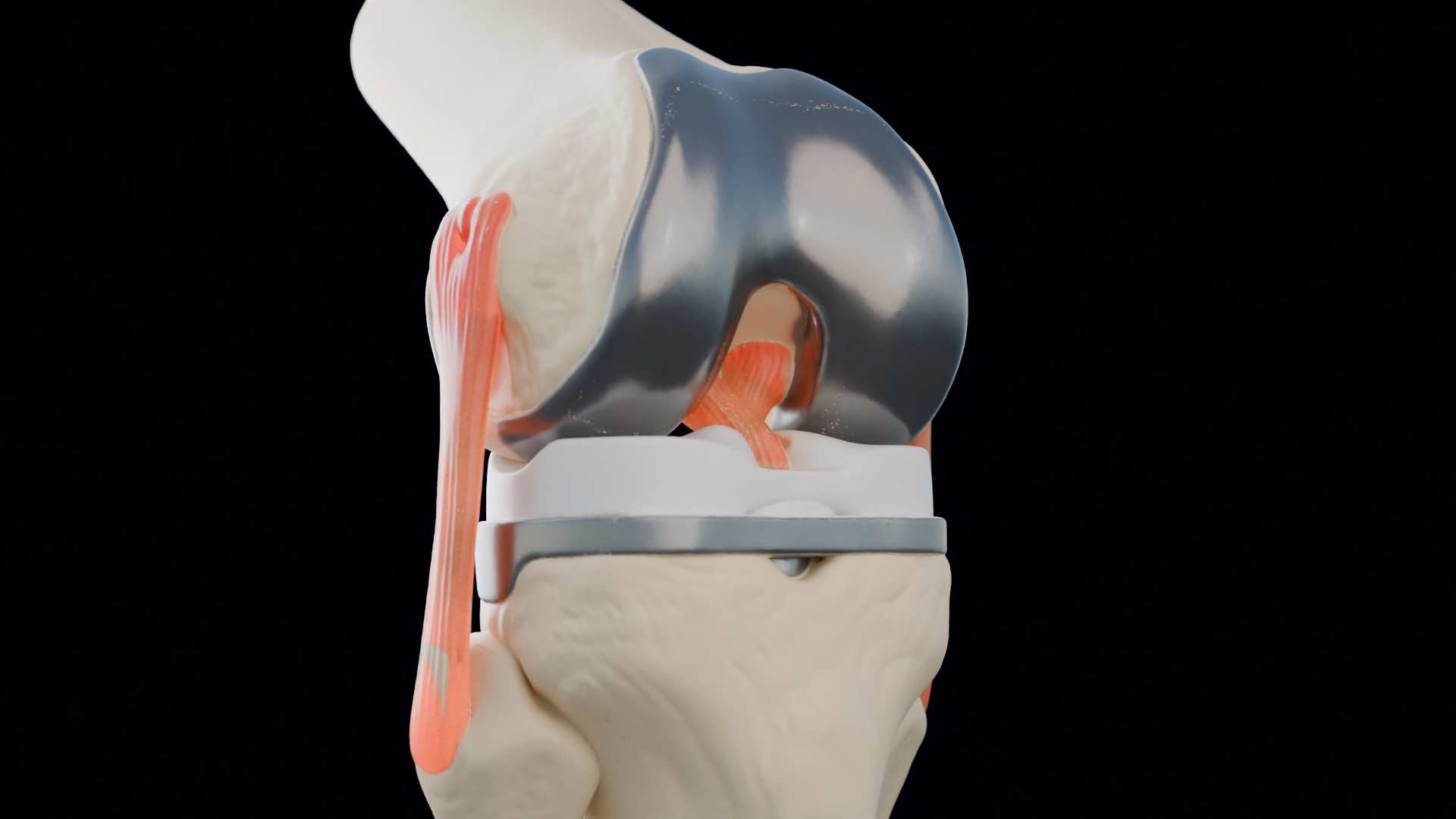
- 1Reduction. The clamp bringing the fragments together, and lag screws across the fracture.
- 2Fixation. The plate seated against the bone, then each screw threaded in.
- 3Checked against imaging. No screw passes where the post-op films show it doesn’t.
- 4What comes next. Arthritis, hardware removal or joint replacement, labelled as future treatment.
Implants are generic and unbranded, sized from the implant log and placed by measuring the post-op films.
See it in motion
Built from the films, not a template


Accuracy
Matched to your client’s X-ray
Measured from the films
Implant positions are measured from the post-op X-rays, so the result matches what is in your client’s body.
Nothing that isn’t there
We check that no screw passes where the films show it doesn’t, and that no hardware enters the joint unless the imaging shows it.
Surgical errors, shown fairly
A malpositioned implant is shown as “should vs did”: correct placement first, then the position on the imaging.
How it works
From Records To Courtroom, On Your Deadline
- Step 01
Send the records
X-rays and CT, op report, implant log, expert report and your dates.
- Step 02 · 12 hours
Visual plan and fixed fee
A shot-by-shot plan and a fixed price, before any work starts.
- Step 03
Build and expert review
Your expert checks each stage before anything is disclosed.
- Step 04
Delivered for mediation or trial
Video, stills and exhibit boards, with source notes for admissibility.
What We Need To Start
- Pre- and post-op X-rays and CT
- Operative report
- Implant log
- Your expert’s report
- Your mediation and trial dates
Send the records. Get a visual plan and fixed-fee quote within 12 business hours.
Free, with no obligation. Tell us your date first and we’ll tell you honestly what can be built in time.

Clinician-directed
Every animation is directed by Dr Kevin Ho, who reads the op note the way your expert does.
Our medical work has been published alongside Harvard Medical School and Sanofi.
Common Questions
Can you match the actual implants?
We use generic, unbranded hardware, sized and positioned from the implant log and post-op films, so it matches what is in your client’s body without promoting a manufacturer.
Can you show a surgical error in an ORIF?
Yes. We build a “should vs did” comparison: correct placement first, then the position shown on the post-op imaging.
Can it be a still exhibit instead of a full animation?
Yes. Any frame can be exported as a still for boards, slides or your expert’s report.
How fast can you deliver?
You get a free visual plan and fixed-fee quote within 12 business hours. Delivery depends on scope and your mediation or trial date, and we’ll tell you up front if a deadline is tight.