

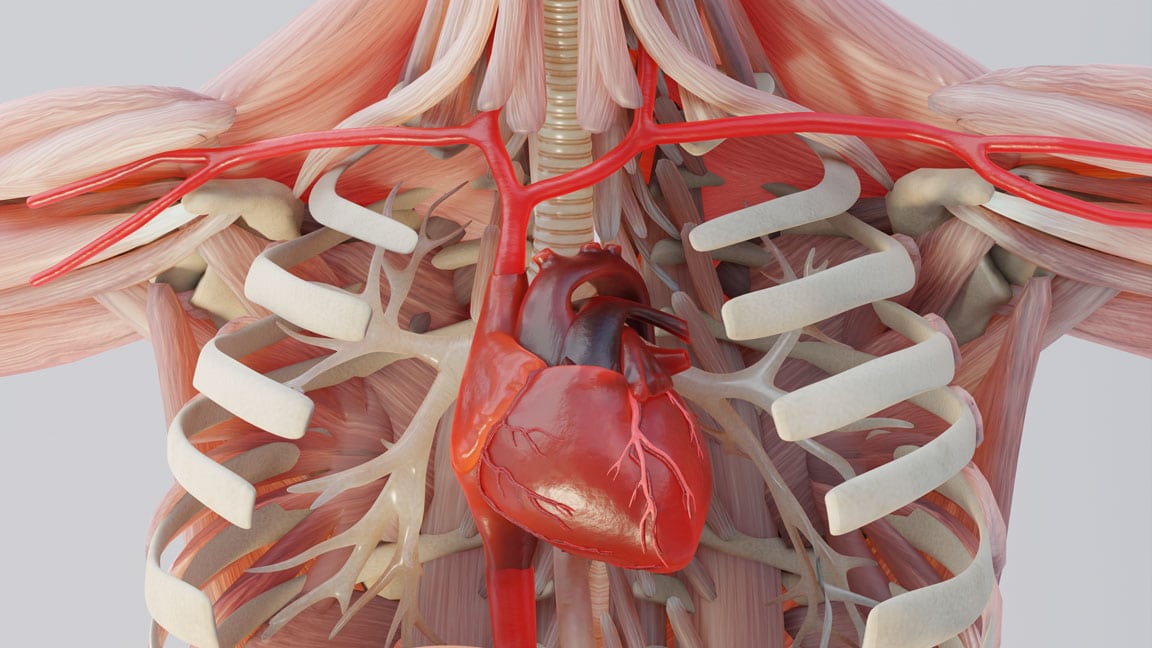

When a case involves a medical device like a hip transplant, an artificial pacemaker, or a surgical mesh, lawyers face a problem that usually does not come up in most other types of lawsuits. These cases are harder to explain to a jury than a typical car accident or slip and fall because the injury is not always visible from the outside. What happens in a typical injury case, let’s say a car accident? You can see the bruises, the broken bones, the scars. So you can make a rough guess at what could have happened. But with a medical device case, the problem is happening inside the body. That’s why medical device product liability animation plays an important role. Jurors have to understand how the device was designed when it failed. That’s a much harder story to tell.
A device may fail due to:
- Structural Weakness
- Design Defect
- Improper Placement
- Material Degradation
But showing that a device failed is not enough to win you a lawsuit. The real challenge is answering:
- How did the device fail inside the body?
- Why did that failure lead to injury?
This is why medical device product liability is so valuable in these cases. You can’t open up a patient and show the jury what happened inside the body. But you can build an animation that shows everything using medical scans.
Why Are Medical Device Cases Difficult to Explain?
When you’re trying a case involving a medical device, you’re asking the jury to understand two completely different complicated things at the same time, and then figure out how those two things relate to each other.
Engineering Mechanics
First, jurors need to understand the engineering side of the case. That means grasping concepts like how much stress a device can handle before it breaks, what metal fatigue looks like, and how a tiny design flaw can cause a part to fail in a specific way. This is not stuff that most people think about in their daily lives.
Human Anatomy and Physiology
Second, jurors need to understand the medical side. That means knowing something about how the body works and where certain nerves are, how blood flows through vessels, and what happens to tissue when it’s damaged, and stuff like that. Again, not exactly dinner table conversation for most families.
The Core Problem
When lawyers try to prove their case using conventional evidence, they usually keep the engineering and medicine in separate piles. The engineering reports are to go in one folder, and the medical records are to go in another.
On the engineering side, you have documents that talk about how the device was designed, what tests were done, and where the failure happened. On the medical side, you have records from doctors and surgeons describing what happened to the patient.
Now the cognitive challenge is that it creates a disconnect:
- How does a fracture in metal translate into nerve damage?
- How does device migration lead to vascular injury?
What is Medical Device Product Liability Animation?
The production of scientifically based 3D visualizations illustrating the interaction of a medical device with the body- and its failure- is known as medical device product liability animation.
What It Combines
- Individual anatomy (DICOM data)
- CAD models (engineering specifications).
- Clinical findings
- Expert testimony
The Result
An integrated visual story that demonstrates:
- Device placement
- Mechanical behavior
- Failure mechanism
- Resulting injury
Engineering: Precision Meets Clinical Reality
Filling the gap between device design and practical application is one of the characteristics in such cases.
One of these devices might work flawlessly under laboratory conditions- but act erratically in the human body.
Why This Happens
The body is not an inert actuality. It introduces:
- Movement (walking, breathing)
- Pressure changes
- Tissue interaction
- Biological reactions
The Key Insight
A machine does not break down on its own; it breaks down within an active biology.
Exploded View Benefit in A Litigation.
The exploded view is one of the most effective techniques utilized in the medical device product liability animation.
What is an Exploded View?
It is a visualization which:
- Separates device components
- Shows internal structure
- Underlines areas of failure.
- Why It Is Important in Court.
Jurors can:
- Well-understand internal mechanisms.
- Know the interaction of components.
- Determine the source of failure.
General Mechanisms of Failure of Devices
1. Mechanical Failure & Fracture
The implants, such as the hip or the spinal hardware, endure repetitive stress.
Failure Types
- Material fatigue
- Stress fractures
- Structural collapse
How Animation Helps
The liability of medical device products can animate by:
- Indicate crack starting locations.
- Demonstrate stress accumulation
- Picture end fracture occurrence.
2. Device Migration & Malposition
The devices are planned to be left in one of the body positions.
What occurs in failure?
- Movement of the device out of the intended position.
- Contacts sensitive structures
- Causes secondary injury
Visual Impact
Jurors can see using animation:
- Original placement
- Movement over time
- Resulting damage
3. Toxicology & Particulate Release
Some devices emit microscopic fragments into the tissue.
Example
Metal implants can generate metal particles, such as metal-on-metal implants.
They can cause an inflammatory reaction.
Why is it so difficult to explain?
This process is:
- Invisible
- Gradual
- Biologically complex
How Animation Helps
- Visualizes particle release
- Shows tissue reaction
- Demonstrates long-term impact
Data-Driven Forensic Modeling
Whereas the generic visuals depend on imagery, the medical device product liability animation is based on actual information.
Step 1: CAD & DICOM Integration
This is among the key differentiators.
What Happens Here
- The manufacturer’s CAD model is obtained
- The DICOM scans of the patient are analyzed.
- The two are merged into one model.
Why This Matters
It enables attorneys to prove:
- The properness of the fit of the device.
- It’s interactions with anatomy.
- Where a mismatch occurs
Step 2: Dynamic Failure Simulation
Simulation of real-life conditions is then followed.
This Includes
- Movement (walking, bending)
- Physiological forces
- Time-based stress
Outcome
The animation shows:
- The behaviour of the device over time.
- When failure begins
- How injury develops
Step 3: Clinical/ Engineering validation
This step will verify that the animation is:
- Medically accurate
- Mechanically realistic
- Legally defensible
Role of Clinical Oversight
A clinician bridges:
- Engineering interpretation
- Medical relevance
Standard of Care & Instructions for Use (IFU)
An important matter of litigation over devices is whether the device was used in a correct manner.
Key Questions
- Was the implanted device placed as per guidelines?
- Were instructions adequate?
- Were safe alternatives to failure?
- How Animation Helps
The animation of the medical device product liability can:
- Compare intended vs actual use
- Highlight deviations
- Show the inevitability of failure
Conclusion
When you’re trying a medical device case, you need something more than just accuracy; you also need clarity. You need to present the information in a way that regular people can understand because the jury doesn’t get it, so the accuracy of your evidence won’t matter. On one side, you have all this complicated engineering data and medical records. On the other side, you have jurors who need to understand the basics of medical device product liability. Animation can build a bridge between those two sides.
Turn complex device failures into persuasive visual evidence. Trial Graphic 360 creates clinician-validated 3D animations helping you present your case with clarity.
Frequently Asked Questions (FAQs)
Q.1. What is medical device product liability animation?
The process consists of the creation of a 3D visualization of the mechanism and nature of interaction between the product and the patient, and the way it malfunctioned.
Q.2. How do animations benefit medical device litigation?
In the legal setting, animation demonstrates the sequence of events leading to the failure of the product and subsequent injury. Animation links engineering concepts with anatomical data to demonstrate causation to juries.
Q.3. Which types of medical device failures can be animated?
Mechanical fractures, migrations,s and malpositions of the device, particulate releases, and design flaws can be animated. The method is most effective for depicting the internal nature of malfunctions.
Q.4. Can medical device animation be used in court?
Certainly, but the animation should meet certain criteria to qualify for admissibility. Animation will be used as demonstrative evidence and has to be accompanied by an expert testimony in support thereof.
Q.5. When should an attorney consider utilizing medical device animation?
Attorneys should think about animating complex failures, cases of ambiguous causation, and internal injuries to make the story clear to the judge and jury members.