

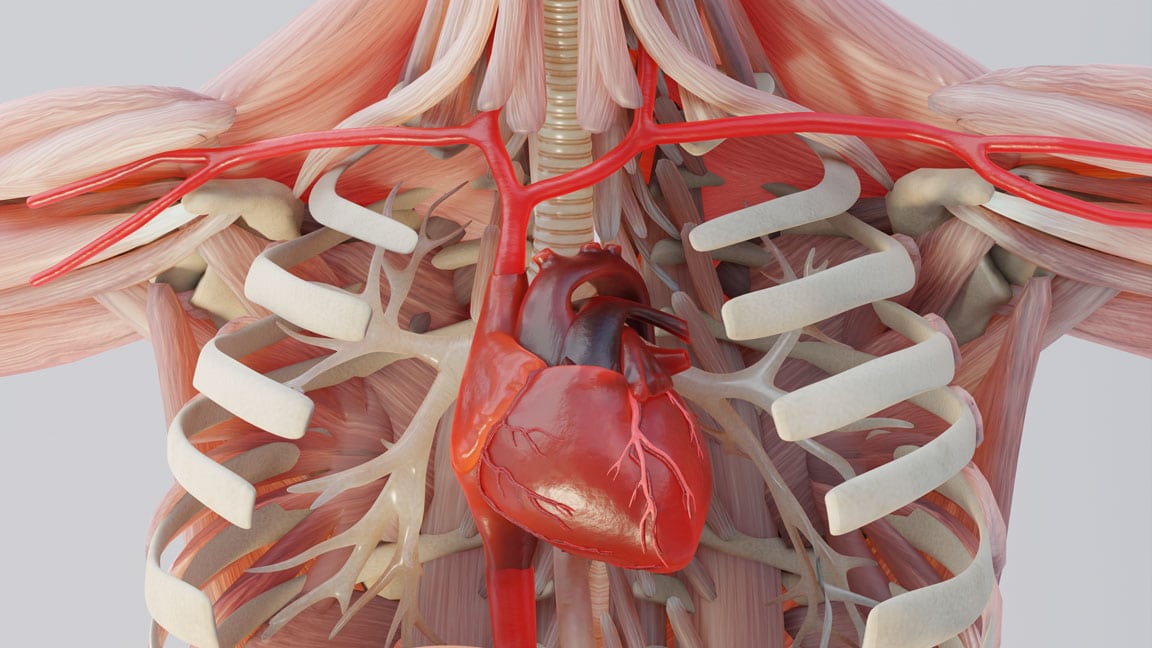

When you’re dealing with a case about birth injuries, you’re looking at three big things at the same time. First and foremost, there’s medicine – doctors, procedures, medical records, complex physiology, and whatnot. Second, there are laws – rules of evidence, legal arguments, what you can and can’t show in the court. And last but not least, there are human emotions involved as a baby is hurt, and you have to deal with parents as well. These cases involve complex physiological processes that are usually difficult to explain using traditional evidence methods alone. That is why 3D animation for obstetric litigation is so important in these cases.
You’re dealing with complex medical procedures where anything could happen. Maybe the baby didn’t get enough oxygen, maybe something happened during delivery that caused damage, maybe nerves got injured. So, how do you explain these things to jurors just by words? Even for your lawyers, there are two challenges. One is providing facts by showing something that went wrong. Then you also have to make the jury understand what happened, why it happened, and how it happened. 3D animation for obstetric litigation helps in explaining what happened inside the body.
Did You Know?
Shoulder dystocia is considered an unpredictable obstetric emergency, and commonly used risk factors have poor predictive value. This uncertainty usually becomes a central point of dispute in litigation.
In this guide, we’ll cover:
- What 3D animation for obstetric litigation is and how it’s created
- Types of birth injury cases
- How visual evidence helps the cases and why traditional evidence often falls short in birth injury cases.
So, let’s break down how 3D animation is changing the way birth injury cases are presented in courtrooms today.
Why Birth Injury Cases are Difficult to Explain in Court
When something goes wrong during a child’s birth, there are a bunch of factors that make these cases harder to explain than almost any other type of medical case.
A.) Dynamic & Time Sensitive Events:
Childbirth is not a slow and steady process, as things can happen unexpectedly sometimes. A baby’s heart rate could drop, and a delivery can get complicated, so decisions need to be made in seconds.
B.) Multiple Physiological Systems:
You’re not dealing with just one person’s body here, but two. The maternal (the mother’s) body is doing one thing while the baby’s body is doing something else. And the interaction between them, or how they respond to each other during labor, is part of what makes these cases complicated.
C.) Critical Deviations from Standard of Care:
Sometimes it doesn’t need to be some huge, obvious mistake, but a small one can make things worse. Even a delay of one minute or a decision that seemed fine at the time but later turned out to be the wrong one.
Challenges
You can’t see severe damage by just looking at the baby’s face, as these injuries do not show up on the surface. That’s why it’s much harder to explain things to someone who doesn’t understand medical terms.
For example:
- Brain injuries caused by oxygen deprivation can’t be “seen” directly.
- Nerve damage may not appear clearly in imaging
- Delivery complications occur in seconds but have lifelong consequences
What is 3D Animation for Obstetric Litigation?
3D animation for obstetric litigation refers to the creation of scientifically accurate visual reconstruction. It demonstrates the sequence of events in a way that makes sense to anyone watching. Based on:
- Medical records
- Imaging data (CT, MRI, where available)
- Expert testimony
- Established medical literature.
These are not artistic interpretations, but they are factual visual explanations.
Core Purpose
- Clarify complicated medical processes.
- Demonstrate causation
- Support expert testimony
- Improve jury comprehension
Understanding Shoulder Dystocia Through Visualisation
What Happens Clinically?
Shoulder dystocia is a form of obstetric complication that may happen during the birth of a baby when the baby’s shoulder is trapped behind the mother’s pelvic bone.
This causes an emergency, in which:
- The supply of oxygen can be impaired.
- Excessive use of power can take place.
- The risk of nerve injury is also high.
Clinical Insight
The brachial plexus injuries are closely linked with shoulder dystocia.
Such injuries become highly likely in the case of dystocia.
Why Verbal Explanation Falls Short
To provide a verbal description of shoulder dystocia, it is necessary to describe:
- Fetal positioning
- Pelvic anatomy
- Applied traction forces
For a jury, this can very easily become abstract.
How 3D Animation Helps
With obstetric litigation of 3D animation, attorneys can:
- Indicate the precise place of obstruction.
- Show the pressure applied to deliver.
- Demonstrate how nerve damage occurs.
Visualising Hypoxic-Ischemic Encephalopathy (HIE)
HIE is a type of brain injury caused by reduced oxygen or blood flow before, during, or shortly after birth.
Key Medical Fact
HIE occurs in approximately 1.5 to 2.5 per 1,000 live births in developed countries, with severe cases leading to long-term neurological impairment or death.
Why HIE Is Difficult to Explain
In contrast to fracture or apparent injury:
- HIE occurs internally
- Damage evolves over time
- Symptoms may appear later
How 3D Animation Improves Clarity
With 3D animation for obstetric litigation, legal teams can:
- Mapping oxygen deprivation pathways.
- Demonstrate cerebral trauma.
- Prove punctuality and sequence.
Why Visual Evidence Improves Jury Understanding
Cognitive Insight
When a visual message is used, human beings process information much better than when it is done through text.
Research-Based Observation
- Illustrations are very effective in the comprehension of intricate medical principles.
- Jurors remember better when it is through visual means.
Supporting Standard of Care Arguments
One significant element of litigation in obstetrics is that of establishing whether the standard of care was addressed.
Key Questions in Court:
- Have proper steps been taken during delivery?
- Was excessive force used?
- Was the injury avoidable?
Role of 3D Animation
The advantages of 3D animation to obstetric litigation include:
- Step-wise mapping of clinical decisions.
- Graphical representation of deviations.
- Enhancement of the expert testimony.
- Questions of Admissibility and Accuracy.
Admissibility and Accuracy Considerations
In legal settings, visual evidence must meet strict criteria.
Key Requirements:
- Accuracy
- Relevance
- Fair representation
- Expert validation
Important Distinction
- Animations = Demonstrative tools.
- Simulations = Scientific reconstruction that needs more scrutiny.
The Process Behind 3D Obstetric Animations
Step-by-Step Workflow
1. Data Collection
Medical records
Imaging (if available)
2. Clinical Review
Expert interpretation
3. 3D Reconstruction
Anatomy modeling
4. Animation Development
This is the visualisation of the injury mechanism.
5. Validation
Expert review
6. Courtroom Integration
Used alongside testimony
When Should Attorneys Use 3D Animation?
You need to think of a 3D animation of obstetric litigation in the case:
- The pathophysiology of the injury is complicated.
- The case is that of neurological damage.
- Timeline is critical
- Understanding among the juries is an issue.
- The Bearing of Strategy in the Litigation.
The Strategic Value in Litigation
Although cases differ, visual clarity is likely to have:
- Jury understanding
- Expert credibility
- Case narrative strength
Observational Insight
Visual tools are becoming more and more resorted to by legal professionals to:
- Bring out new evidence more efficiently.
- Reduce ambiguity
- Enhance appeal to persuasion.
Conclusion
Birth injury cases demand a high level of clarity and accuracy because the facts have to hold up under scrutiny. And you need to be sensitive because you’re thinking about a real family. A real baby and a real moment that changes their life. Explaining conditions like shoulder dystocia or HIE requires effective communication.
At the end of the day, what decides a case is whether the jury really understands what happened to that baby and why it matters. In a courtroom, when understanding shapes outcomes, the ability to show, not just tell, can be a decisive advantage.
Bring clarity to complex birth injury cases with clinically accurate visual evidence. Work with Trial Graphics 360 to transform obstetric events into precise, 3D animations.
Frequently Asked Questions (FAQs)
1. What is 3D animation for Obstetric litigation?
The process of 3D animation in obstetric litigation is a process of creating a visual reconstruction of events that occurred during childbirth by using medical data and information.
2. How does 3D animation help in birth injury cases?
The 3D animation helps in this case by illustrating how a certain birth injury occurred. For example, a child may have experienced shoulder dystocia or HIE. It helps in making a complex medical explanation simpler and easier to understand for a jury.
3. Is 3D animation admissible in court?
Yes, 3D animation can be admissible in court if it meets legal requirements and is deemed fair and accurate. It is normally used as a demonstrative evidence tool and is admissible if supported by expert testimony.
4. What types of birth injuries can be visualised?
The 3D animation can be used to illustrate a range of birth injuries, including shoulder dystocia, brachial plexus birth injury, HIE, and delivery trauma. It is particularly helpful in illustrating internal injuries that are difficult to explain through other evidence.
5. When should attorneys use 3D animation in obstetric cases?
Attorneys can benefit from using 3D animation in a case if they are dealing with a complex medical explanation and are not sure how to explain it to a jury. It is particularly helpful when dealing with a case that has a neurological birth injury.