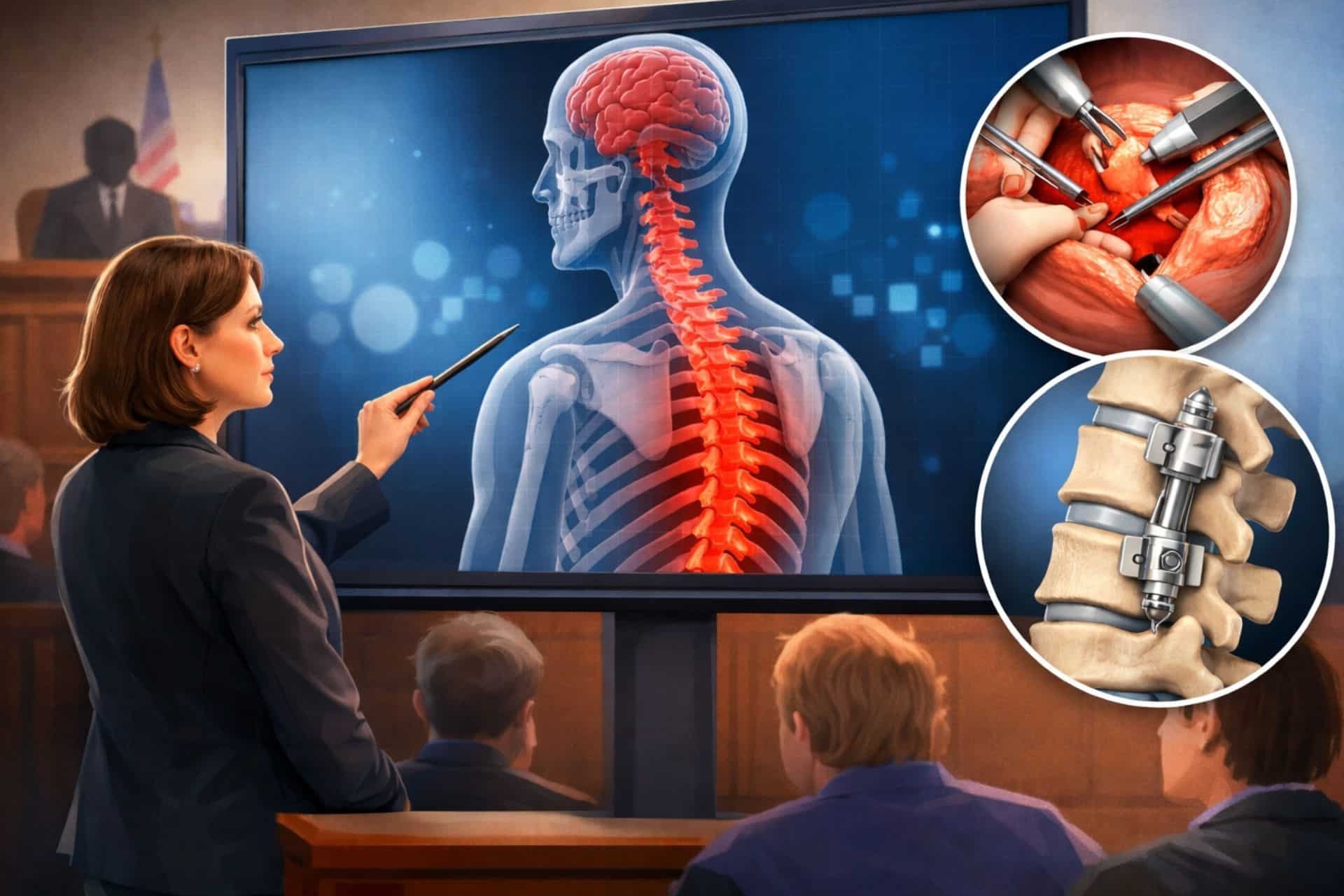

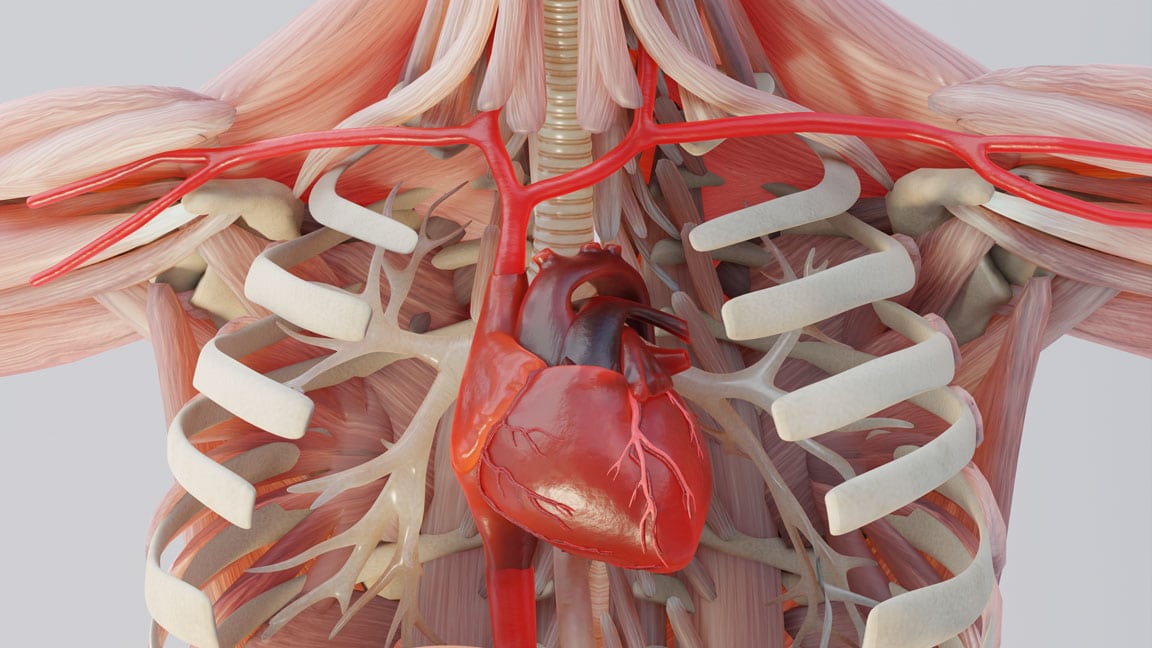


In today’s visually driven world, legal animation has emerged as an indispensable tool for attorneys seeking to clarify complex events, processes, and concepts for judges and juries. From accident reconstructions to medical procedures and product liability demonstrations, a well-crafted animation can transform abstract testimony into a compelling, easy-to-understand narrative.
However, the power of legal animation comes with a critical caveat: admissibility. An animation, no matter how brilliant, is useless if it never makes it into the courtroom. This guide will walk attorneys through the essential steps to lay a solid foundation for legal animation, ensuring its smooth journey from creation to compelling courtroom evidence.
Understanding the Legal Standard for Admissibility
At its core, the admissibility of legal animation hinges on two primary rules of evidence: relevance (Federal Rule of Evidence 401 & 402) and authenticity/accuracy (Federal Rule of Evidence 901 & 1002, and the foundational requirements of expert testimony). Most courts categorize animations as “demonstrative evidence” – visuals used to illustrate or explain testimony, rather than standing as substantive evidence on their own.
Some courts may treat highly realistic or scientific animations as “substantive evidence,” requiring a more rigorous foundation akin to scientific expert testimony (e.g., Daubert standards). The key is to prepare for the highest possible standard.
Phase 1: The Foundational Pillars – Accuracy and Reliability
The journey to admissibility begins long before your animation is even rendered. It starts with meticulous preparation and an unwavering commitment to factual accuracy.
1. The Power of the Expert Witness
Your expert witness is the linchpin of your animation’s admissibility. The animation is merely a visual extension of their testimony.
- Establish Expertise: Ensure your expert is qualified in the relevant field (e.g., accident reconstructionist, medical doctor, engineer). Their qualifications must be beyond reproach.
- Data-Driven Animation: The expert must directly supervise, review, and ultimately adopt the animation as an accurate representation of their opinions and conclusions. Every frame, every movement, every detail must be based on data and principles that the expert would testify to independently.
- Methodology is Key: The expert should explain the scientific or technical methodology used to arrive at their conclusions, and how that methodology translates directly into the animation.

2. Sourcing Impeccable Data
Garbage in, garbage out. The animation is only as good (and as admissible) as the data it’s built upon.
- Primary Sources Only: Rely on original, verifiable evidence: police reports, medical records, engineering schematics, photographs, depositions, witness statements, black box data, surveillance footage, and accident scene measurements.
- Documentation, Documentation, Documentation: Keep a meticulous record of every piece of data used, its source, and how it informed specific elements within the animation. This paper trail is invaluable during challenges.
- Avoid Speculation: If data is unavailable for a certain element, do not guess. Either omit it, represent it neutrally, or clearly label it as a hypothetical (though generally, hypotheticals carry higher admissibility risk).
Phase 2: The Production Process – Transparency and Precision
Your animation team isn’t just creating visuals; they’re creating a record. Transparency in their process is crucial.
1. Collaborate Closely with Your Animation Team
Treat your animation specialists as an extension of your legal and expert team.
- Early Engagement: Bring your animators in early to understand the case theory, review key evidence, and discuss expert testimony.
- Iterative Review: Establish a clear review process. Your legal team and expert witness should review drafts at critical junctures, providing feedback and ensuring accuracy.
- Technical Explanations: Your animation team should be prepared to explain the technical aspects of their work – the software used, the methodologies for rendering, and how they ensured scale and timing accuracy.
2. Design for Clarity, Not Bias
While animations are persuasive, their primary role in court is to be illustrative and accurate, not sensational.
- Neutrality in Rendering: Avoid exaggerated graphics, overly dramatic camera angles, or emotionally manipulative elements. The goal is to accurately depict events, not to inflame the jury.
- Clear Labeling: Clearly label any elements that are hypothetical, representational, or outside of direct evidence. For instance, if you’re showing an internal organ but only have external injury reports, label the internal view as an “anatomical representation.”
- Scale and Timing: Ensure that time, distance, and scale are accurate to the expert’s testimony and the underlying data. Any deviation, even slight, can be a point of attack.
Phase 3: The Courtroom – Anticipating and Overcoming Challenges
Even with meticulous preparation, opposing counsel will likely challenge your animation. Be ready.
1. Motion in Limine
Expect opposing counsel to file a Motion in Limine to exclude your animation. This is where your detailed documentation and expert’s testimony become crucial.
- Pre-Emptive Disclosure: Provide the animation to opposing counsel well in advance, along with the foundational evidence, expert report, and methodology. Transparency can sometimes deter challenges or at least limit their scope.
- Detailed Response: Your response to a Motion in Limine should clearly lay out:
- The expert’s qualifications.
- The data relied upon.
- The methodology used to create the animation.
- How the animation accurately depicts the expert’s opinions.
- Why the animation is more probative than prejudicial (FRE 403).
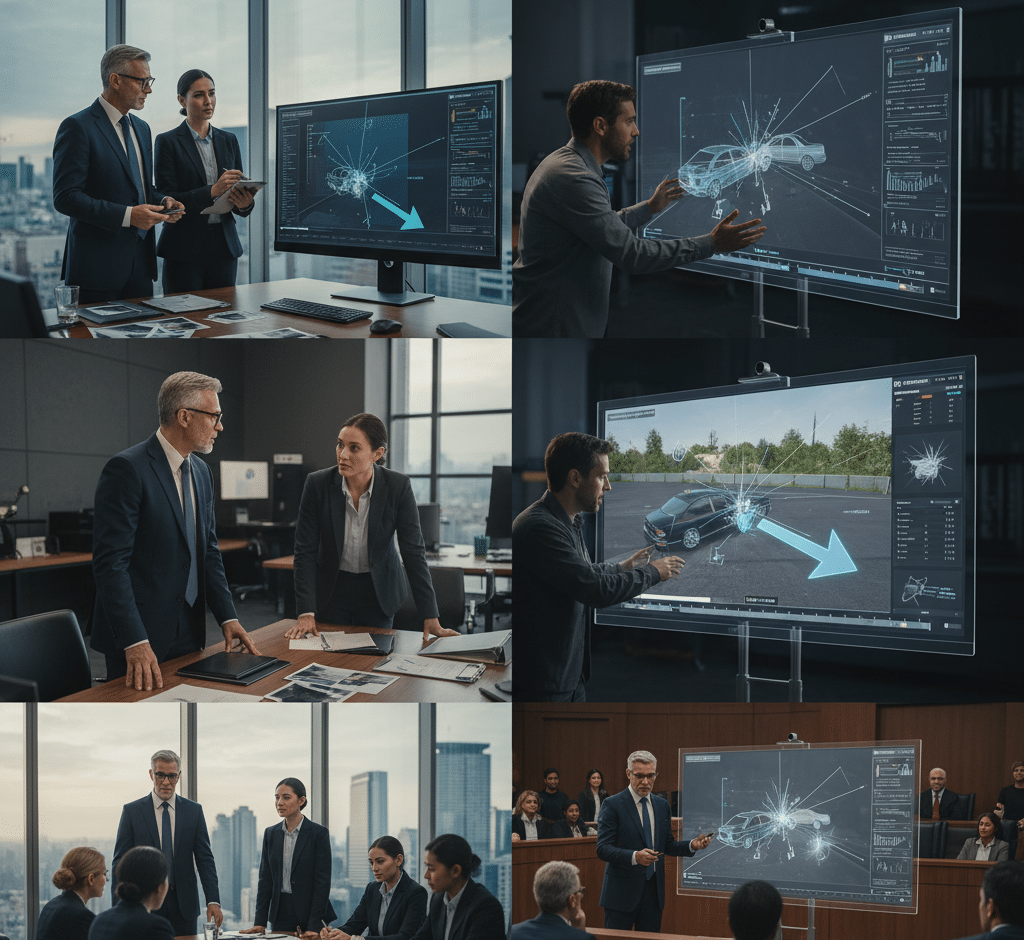
The collage shows different stages of a legal team preparing and presenting a courtroom animation. The upper left and middle images show a legal team reviewing data and 3D wireframe models of vehicles, while the bottom left image shows a broader view of the team. The upper right and bottom right images show an attorney presenting the animation in a courtroom setting to a judge and jury, with the animation displayed on a large screen.
2. Laying the Foundation During Trial
If your animation survives pre-trial challenges, you must still lay the proper foundation during your expert’s testimony.
- Step-by-Step Explanation: Have your expert explain:
- Their qualifications.
- The materials they reviewed (reports, data, etc.).
- The methodology they used to form their opinions.
- How they reviewed and approved the animation.
- That the animation is a fair and accurate depiction of their opinions and conclusions based on the evidence.
- Offer of Proof: Be prepared to make an offer of proof if the judge expresses hesitancy. This involves explaining, outside the jury’s presence, precisely what the animation will show and why it’s critical to understanding the expert’s testimony.
- Address Rule 403: Be ready to argue that the probative value of the animation (its ability to clarify complex issues) substantially outweighs any potential for unfair prejudice, confusion, or misleading the jury.
 Conclusion
Legal animation is a powerful ally in the courtroom, offering an unparalleled ability to simplify the complex and illuminate the obscure. By adhering to a rigorous process rooted in accuracy, transparency, and expert validation, attorneys can confidently navigate the challenges of admissibility, ensuring their visual evidence powerfully supports their case from its foundation all the way to the jury’s verdict.