In the world of personal injury litigation, “unremarkable” is one of the most dangerous words in a radiology report. When a client presents with clear cognitive decline, personality shifts, and debilitating fatigue after a motor vehicle accident, but the initial CT or MRI comes back “clean,” the defense immediately pivots to a narrative of exaggeration.
But as clinicians, we know that standard imaging is designed to find structural catastrophes—skull fractures and large-scale hemorrhages. It is notoriously poor at detecting the microscopic reality of a Coup-Contrecoup injury.
The Science of the “Invisible”
During a high-velocity impact, the brain—which has the consistency of soft gelatin—strikes the internal ridges of the skull. This is the Coup (the initial strike) and the Contrecoup (the rebound). This force creates Axonal Shearing, where the long-distance connecting fibers of the brain are stretched and torn at a cellular level. You won’t see this on a standard MRI, but the patient feels it every single day.
How Trial Graphics 360 Changes the Narrative
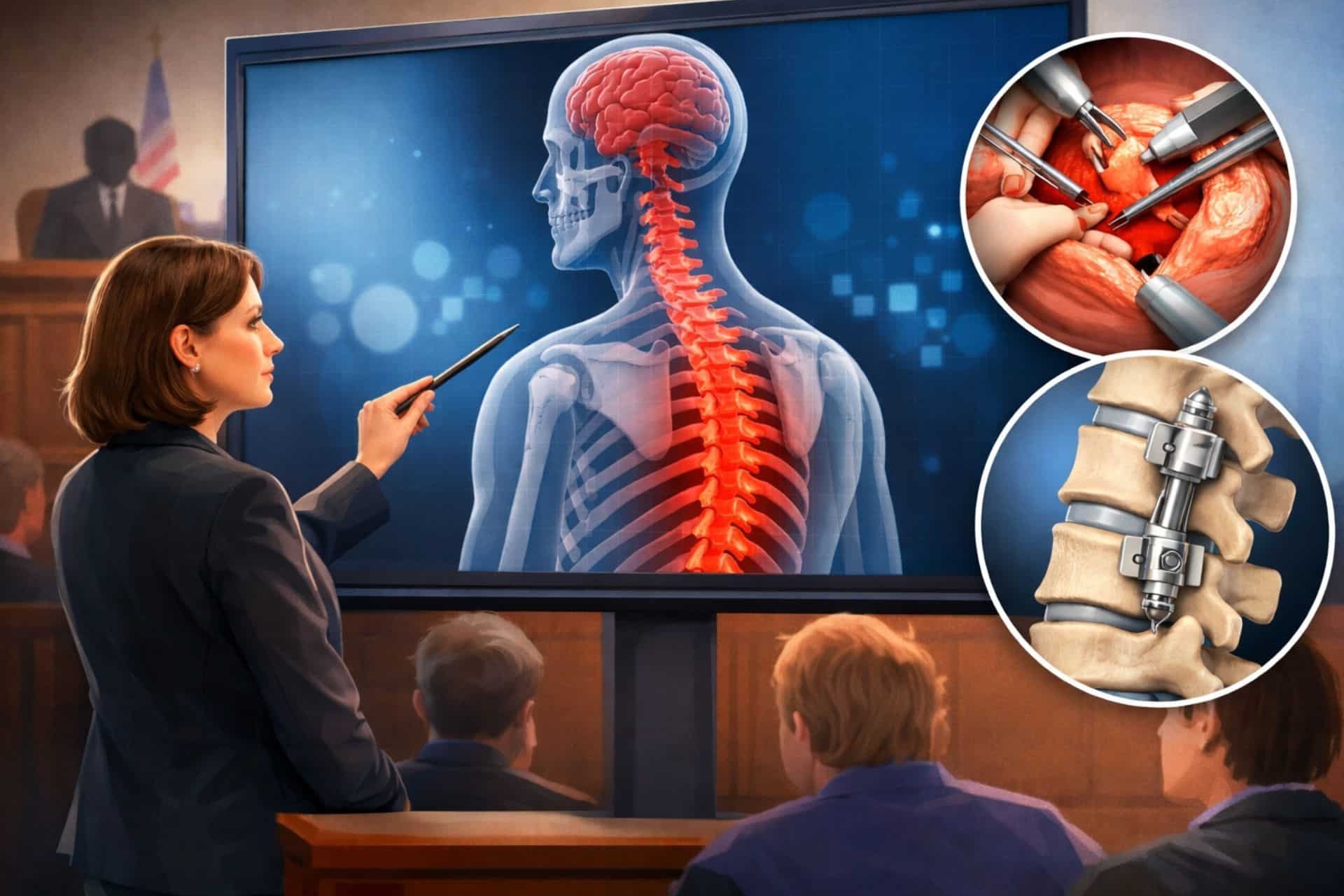
We don’t just tell the jury about brain damage; we show them the physics of the trauma. By visualizing the metabolic cascade and the physical stretching of neurons, we bridge the gap between subjective symptoms and objective science. We turn the “invisible” injury into a visual certainty that demands fair compensation.